

The lack of real evolution in wildfire combat vehicles over the past several decades has left our forests and communities devastated by modern Mega-fires.
Since 2001, our dedicated research team has identified several critical deficiencies that undermine the ability of nations and firefighting agencies to effectively contain major wildfires.

1. No True Global Committed to Combating Wildfires: Global Commitment There is a lack of understanding and global commitment to establish a true international organization to respond to the needs of all nations experiencing devastating regional wildfires. This deficit fuels doubts and confusion about whether these major fires can ever be brought under control.
T


2. Using Less Effective Vehicle’s: Pump Trucks Fire trucks, or pumpers, are contemporary engines designed primarily to respond to structural fires. They transport personnel, equipment, and a limited water supply (around 500 to 1,500 gallons), meaning they are not built to withstand the intense conditions of wildfires. Furthermore, these vehicles rely heavily on manual operation, requiring firefighters to engage flames directly at close range to be effective.
T

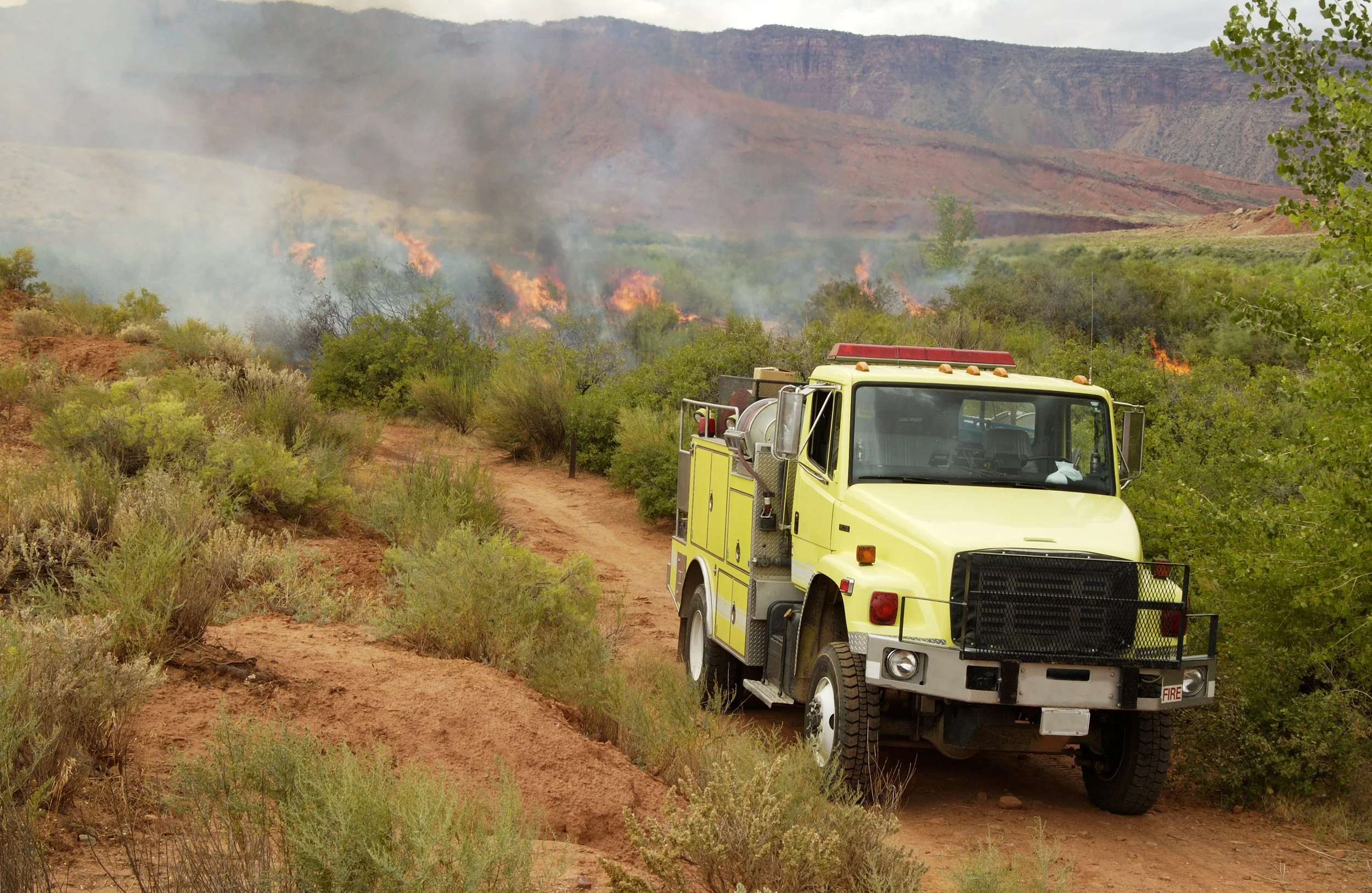
Wildland Fire Engines Brush trucks are specialized wildland engines built for off-road terrain. They carry crews, equipment, and 300 to 850 gallons of water. However, like structural pumpers, they lack the automation to suppress massive wildfires safely from afar, forcing firefighters to engage the flames manually at close quarters.
T
BulldozersT
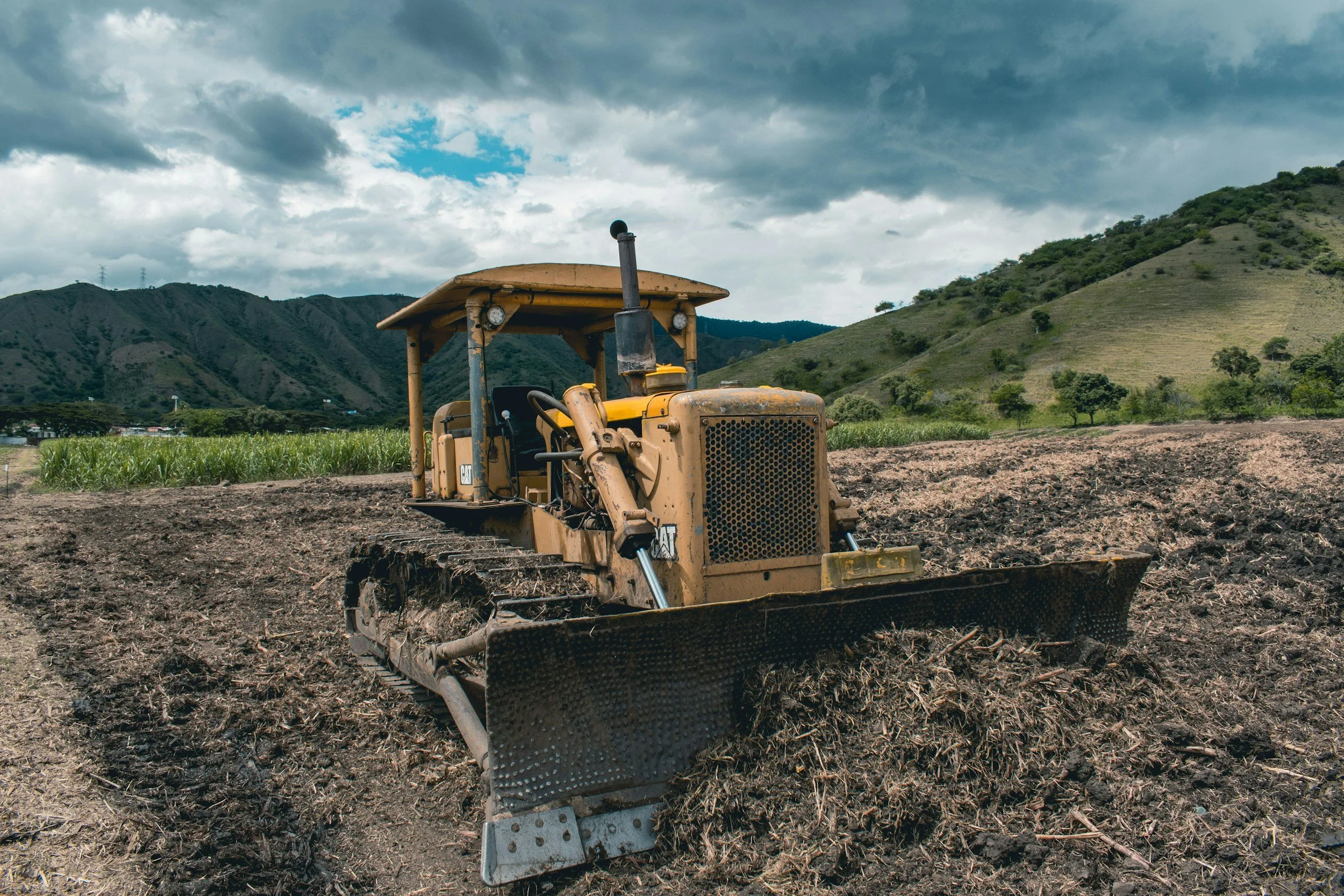
Bulldozers are highly effective at clearing trees and earth to build wildfire containment lines. However, because they operate at a slow, constant pace, their deployment requires rapid strategic planning. Firefighters must accurately anticipate the fire's movement to ensure the bulldozer has enough time to establish a successful barrier.
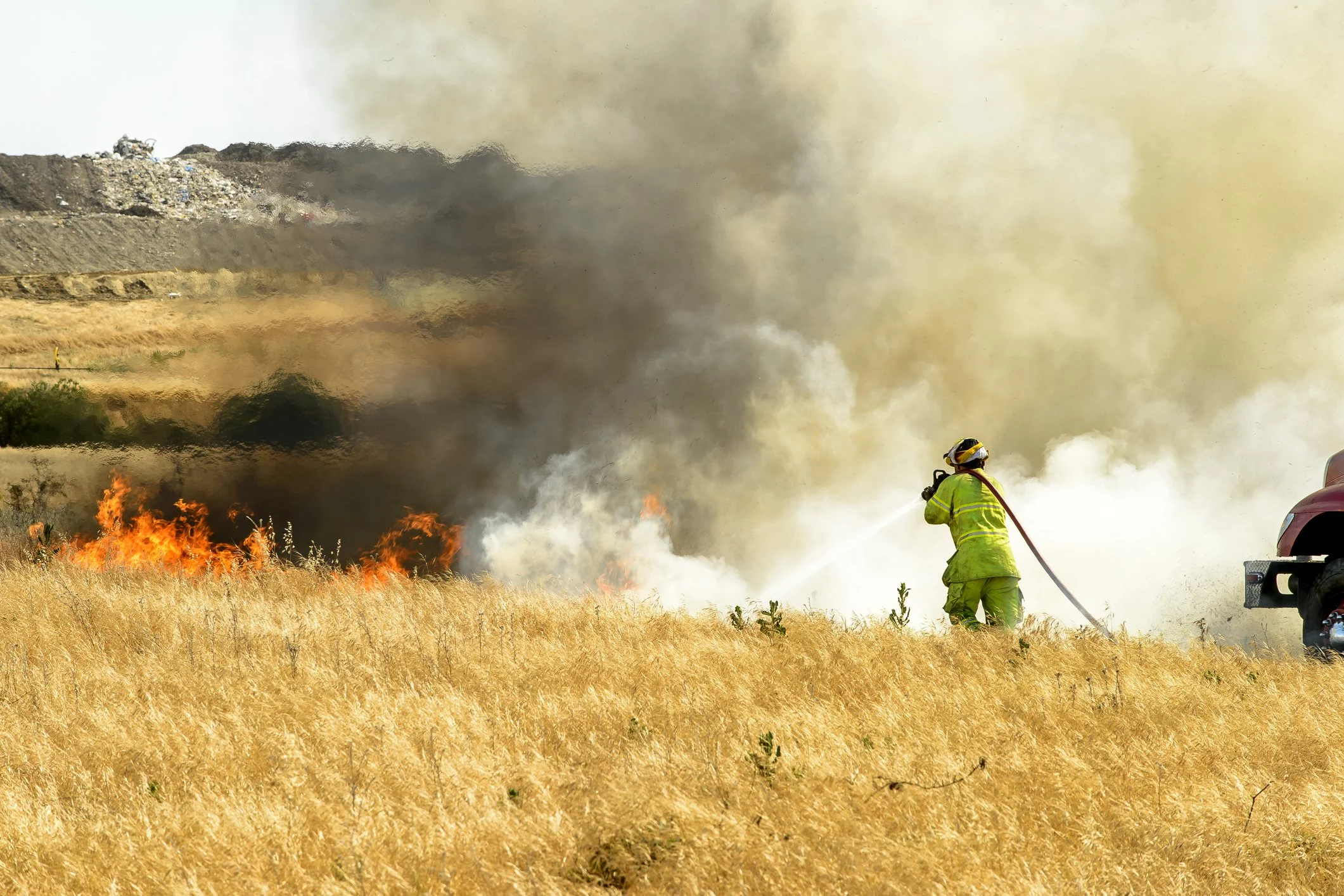
Grass Fires While Grass fires are less intense than forest fires, they are exceptionally dangerous because they can ignite and spread at speeds up to 15.5 miles per hour. Under conditions of high temperatures, low humidity, and strong winds, these fires can rapidly consume hundreds of acres. Yet, the vehicles deployed to combat them remain basic wildland fire engines, which carry limited water and rely heavily on manual labor.
T
Vehicle design has a profound impact on how quickly wildfires are contained. Currently, standard wildland engines and structural pumpers severely restrict mobility, limiting firefighters' ability to suppress the massive, resilient blazes common today. These structural limitations impede rapid transit between hot spots, decreasing operational efficiency and compounding the physical workload while compromising crew safety. Ultimately, modern response vehicles fall short of the performance required to combat increasingly fast-moving and extreme wildfires.

3. Using No Vehicle’s At All: Peat Fires Peat fires are among the least understood blazes globally, yet they pose a severe threat. Burning deep underground, these fires are incredibly difficult to extinguish and can smolder for months, regularly causing local Air Quality Index levels to plummet into categories considered hazardous for everyone. Current suppression methods are limited to dropping massive quantities of water from helicopters, deploying agricultural irrigation systems for continuous spraying, or completely flooding the affected terrain as a last resort.
Historically, no specialized vehicles have existed to combat these underground blazes—Until Now.
T

4. Using Manual Labor: Manual Labor Firefighting agencies have relied heavily on Manual Labor to combat encroaching wildfires for centuries. This reliance is a proud, long-standing tradition passed down through generations. It remains one of the most critical elements in wildland fire suppression, playing a vital role in slowing the spread of catastrophic blazes.
Unfortunately, firefighting resources are often stretched thin. Crews typically endure exhausting 12-hour shifts or longer, which drastically increases their physical workload. This grueling schedule compromises operational effectiveness, reduces overall crew safety, and directly contributes to the chronic fatigue, mental stress, and PTSD experienced by many firefighters.
It is paramount that we begin replacing the brutal manual labor associated with wildland firefighting with more autonomous systems.
T

5. Limitations of “ordinary Water”:Water Water is an inexpensive and widely abundant substance, making it an invaluable asset in fighting wildfires. However, the sheer volume of water required to suppress a large-scale fire presents a massive logistical challenge for today's limited vehicles.
T
